








Tech is changing fast, and that creates both pressure and opportunity. UNESCO reports that women still make up only 35% of STEM graduates, and only 22% of STEM jobs in G20 countries are held by women. At the same time, the U.S. Bureau of Labor Statistics projects STEM employment will grow 8.1% from 2024 to 2034, with a 2024 median annual wage of $103,580 for STEM occupations. The message is clear: the door is open, but you need the right strategy to walk through it with confidence.
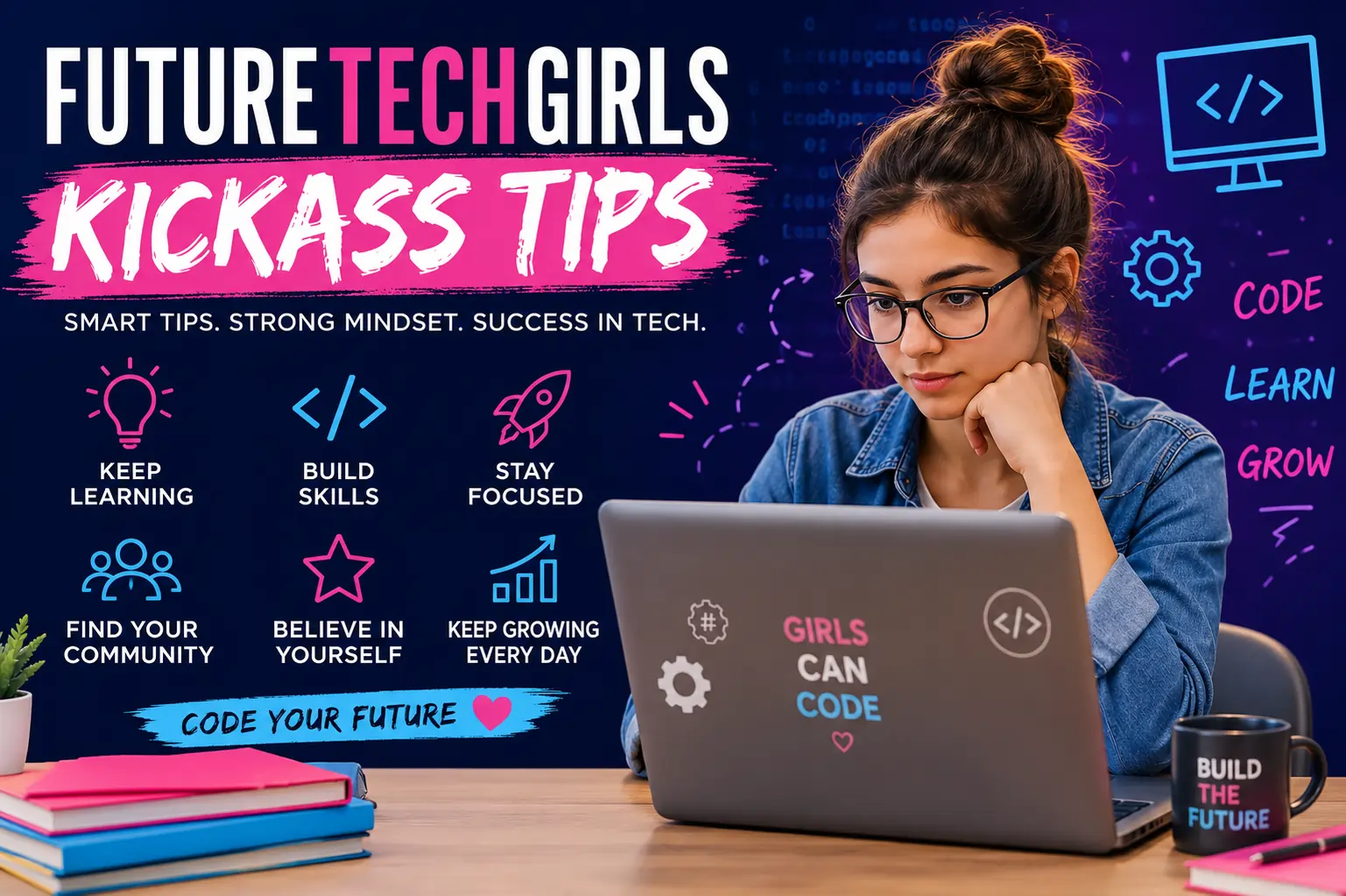
That is exactly why FutureTechGirls kickass tips matter. This is not about pretending tech is easy. It is about building the skills, habits, and mindset that help you grow faster, stay consistent, and stand out in a crowded field. The World Economic Forum says employers expect 39% of workers’ core skills to change by 2030, and they are placing rising value on AI and big data, analytical thinking, resilience, flexibility and agility, and technological literacy. That means the best path forward is not guessing. It is preparing with intention.
1. Start With a Mindset That Expects Growth
The first of these FutureTechGirls kickass tips is simple. Stop waiting to feel “ready.” In tech, readiness usually comes after repetition, not before it. UNESCO says girls and women are still held back by bias, social norms, and limited access to opportunity, which means confidence is not just a personality trait. It is something you build on purpose.
A growth mindset helps you treat mistakes as information instead of failure. If you do not understand a concept, that does not mean you do not belong. It means you found the next thing to learn. NCWIT even highlights growth mindset as one of the areas it helps organizations and learners develop through research-backed learning resources. That is a strong signal that mindset is not fluff. It is a core career asset.
2. Learn One Core Skill Before You Try to Learn Everything
A common mistake is trying to study every new tool, platform, and trend at once. That sounds ambitious, but it usually leads to burnout. A better move is to pick one foundational skill and get genuinely good at it. That could be coding, data analysis, UX design, cybersecurity basics, or AI literacy. The World Economic Forum’s 2025 skills outlook shows that AI and big data, networks and cybersecurity, technological literacy, and analytical thinking are all rising in importance. That makes focused learning a smart move, not a narrow one.
This is one of the most practical FutureTechGirls kickass tips because it keeps progress visible. When you build one strong skill, you can show it, explain it, and use it. That creates momentum. Momentum is what turns a beginner into someone employers notice.
3. Build Problem-Solving Muscle, Not Just Tool Knowledge
Tech is not only about knowing software. It is about solving problems with software, data, design, or systems. The World Economic Forum says technological change is driving demand for critical problem solving in a data-driven world. That is the real game. People who can think clearly under pressure often become the people teams trust most.
So when you practice, do not only memorize features. Ask better questions. What is the real problem here? What causes the issue? What would a simpler fix look like? How can I test whether my solution works? These habits make your thinking sharper. They also make you more valuable because employers do not just hire knowledge. They hire judgment.
4. Treat Communication Like a Technical Skill
One of the strongest FutureTechGirls kickass tips is also one of the most ignored. Learn how to explain your ideas clearly. In tech, communication is not optional. It is how you get feedback, collaborate, defend your work, and move into leadership. The World Economic Forum places leadership and social influence among the skills rising in importance, which tells you that communication is part of career growth, not something separate from it.
This matters whether you are writing documentation, presenting a project, or explaining a bug to a teammate. Clear communication saves time and builds trust. It also helps you sound confident even when you are still learning. If you can make complex ideas simple, people remember you.
5. Find Mentors, Communities, and Real Support
No one builds a serious tech career completely alone. Support systems shorten the learning curve. AnitaB.org says it offers career development, apprenticeships, mentorship, and networking opportunities for tech professionals at every stage. NCWIT also describes a large community of change leaders working to expand access to knowledge and opportunity in computing. Those are not just nice extras. They are growth multipliers.
Girls Who Code adds another important point. In its report with the American Institutes for Research, participants in its summer programs were more likely than comparison students to major in computer-science related fields, and the organization says those programs help instill confidence in new skills. That is powerful evidence that structured community support can change outcomes.
So this FutureTechGirls kickass tips section is really about access. Join online groups. Attend meetups. Ask thoughtful questions. Find women already doing the job you want and study how they built their path. Community does not replace hard work, but it makes hard work far more effective.
6. Build Proof of Work Early
If you want people to take your growth seriously, show them your work. A portfolio, GitHub profile, design case study, blog, or project demo can do more for your credibility than vague claims ever will. In a field where skills are changing quickly, visible proof matters because it shows what you can actually do right now. The WEF’s skills outlook makes that clear by highlighting how rapidly technical skills, creativity, and analytical thinking are evolving in importance.
This is one of the smartest FutureTechGirls kickass tips because it shifts you from passive learner to active builder. You do not need a perfect portfolio. You need a living one. Add projects. Improve them. Explain your process. Even small projects create a trail of evidence that you are serious.
7. Stay Visible, Even When You Feel Small
Many talented girls stay hidden because they are waiting to be “good enough” before speaking up. But visibility is part of growth. UNESCO says role models and mentorship help girls build confidence and pursue scientific careers, and its recent work on STEM education emphasizes making women in science visible so stereotypes can be challenged.
That means you should share your progress, not just your finished wins. Post what you are learning. Talk about projects. Ask questions in public spaces. Visibility is not bragging when it is tied to learning and contribution. It is how people find you, support you, and remember you.
8. Stay Resilient When the Learning Curve Feels Heavy
Every tech journey includes frustration. Bugs do not disappear because you are talented. Interviews do not become easy because you are motivated. Projects break. Feedback stings. Progress can feel painfully slow. The WEF says resilience, flexibility and agility are among the skills rising most in importance. That is not a motivational slogan. It is a labor-market reality.
A resilient learner does three things well. First, she keeps going after a setback. Second, she learns from the setback instead of personalizing it. Third, she adjusts the method without abandoning the goal. That is what turns a rough week into a stronger skill set. Among all FutureTechGirls kickass tips, this one protects everything else you are building.
9. Follow the Direction of the Market, Not the Noise
A lot of people chase whatever is trending on social media. That is usually a mistake. The better approach is to follow durable demand. BLS projects strong STEM growth through 2034, and the WEF says employers expect major shifts in core skills by 2030, with AI and big data, cybersecurity, analytical thinking, and technological literacy all gaining importance. That means your time is best spent on skills that will stay relevant beyond one hype cycle.
This does not mean you need to become an expert in everything tied to AI. It means you should think strategically. Learn the foundations. Understand the tools. Stay flexible. If you can combine technical literacy with communication, problem solving, and adaptability, you become much harder to replace and much easier to trust.
10. Make Consistency Your Competitive Advantage
Most people overestimate what they can do in a week and underestimate what they can do in a year. Consistency is how long-term advantage gets built. Girls Who Code’s research-backed programs show that structured learning and repetition can improve outcomes and confidence, while NCWIT’s learning resources emphasize growth mindset, allyship, and leadership as part of a broader ecosystem for success. The pattern is obvious: small, repeated effort beats bursts of motivation.
So keep the schedule realistic. Learn a little every day. Build one thing. Review one concept. Ask one good question. That rhythm compounds. And over time, compound effort becomes expertise.
Why These FutureTechGirls Kickass Tips Work
These tips work because they match how tech careers actually grow. The market rewards people who can learn quickly, think clearly, communicate well, and keep moving through change. UNESCO’s data shows the gender gap is still real, but the same reports also show why this moment matters: STEM careers are central to the future, and the path into them is increasingly shaped by skills, confidence, and access to support.
That is the real message behind FutureTechGirls kickass tips. Do not wait for the perfect timing. Build the foundation now. Get your first skill. Find your people. Show your work. Stay in motion. That is how a beginner becomes a builder.
FAQs
What are FutureTechGirls kickass tips?
They are practical strategies for girls and young women who want to build confidence, learn tech skills, and grow in the technology field. The strongest versions of these tips focus on mindset, skill-building, communication, and support systems.
Do you need coding experience to start?
No. A strong start can come from many directions, including design, data, product thinking, cybersecurity basics, or AI literacy. The key is to begin with one path and build steady competence.
How do mentors help in tech?
Mentors can shorten your learning curve, help you avoid common mistakes, and give you a clearer view of what success looks like in the field. Organizations like AnitaB.org and NCWIT highlight mentorship, networking, and career development as part of building stronger tech careers.
Is tech a good career path for women?
Yes. The field still has a gap, but there is also major opportunity. STEM jobs are projected to grow, and both UNESCO and WEF show that the skills needed for the future are increasingly technical, adaptive, and human-centered.
Final Thoughts
The best FutureTechGirls kickass tips are not flashy. They are durable. Learn one skill well. Stay curious. Build proof of work. Find a community. Keep going when confidence dips. Those habits matter because the tech world is changing quickly, and the people who adapt with discipline are the ones who move forward.