









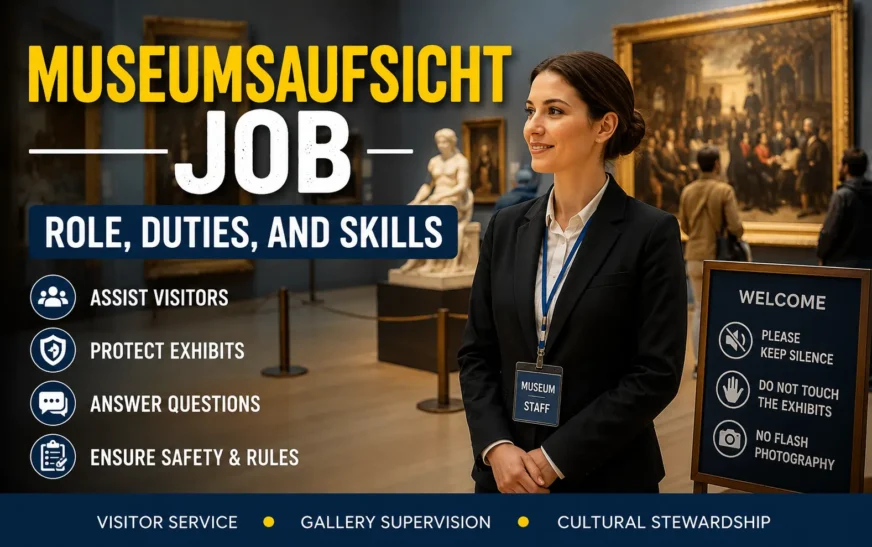
Museums are treasure troves of art, history, and culture. Behind the scenes, a Museumsaufsicht (museum attendant) ensures this treasure stays safe while visitors enjoy it. In this job, you’ll blend friendliness with vigilance. You might welcome guests, answer questions, and gently enforce rules. At the same time, you’re quietly patrolling the galleries to protect exhibits. A Museumsaufsicht is essentially the museum’s frontline: a helper to visitors and a guardian of artifacts in one role.
What Is a Museumsaufsicht Job?
A Museumsaufsicht (literally “museum supervision”) is often called a museum attendant or gallery assistant. This role goes beyond mere watching; it embodies visitor service and security. As one career guide explains, attendants are the “first point of contact” and work “at the intersection of customer service and cultural stewardship,” making sure visitors have an “enriching experience”.
In practice, a Museumsaufsicht greets visitors, gives directions, and provides basic information about the exhibits. You might help someone find the right gallery or explain a museum rule (for example, why touching the sculpture is not allowed). Think of yourself as an ambassador for the museum’s mission: you keep the place welcoming and educational while quietly preventing any accidents or theft.
Museumsaufsicht staff also often perform light administrative tasks. For example, in smaller museums you may check tickets, sell brochures, or operate audio-visual displays. In any case, your job is to ensure the museum runs smoothly from opening to closing – a blend of customer service and watchfulness.
Daily Duties and Responsibilities
The day-to-day work of a Museumsaufsicht can vary with the museum, but common tasks include:
- Visitor assistance: Greet guests at the door or desk, check tickets, and guide people to exhibits. If visitors ask simple questions (“Where is the Renaissance gallery?”), you provide quick answers and directions. Clear communication is key here.
- Gallery patrols: Walk through your assigned exhibition areas regularly. These unscheduled, discreet checks help you spot any issues early – a visitor too close to an artifact, a spill on the floor, or someone touching a painting. You prevent damage by intervening politely.
- Enforcing rules: Gently remind visitors of museum etiquette. For example, you might say, “We ask all our guests to keep voices low so everyone can enjoy the exhibits”. The goal is to maintain a calm atmosphere without sounding harsh.
- Equipment and safety checks: Operate house technology as needed (like turning on exhibit lights or screens) and perform closing routines. For instance, before the museum closes you’ll do a final sweep to ensure everyone has left and all lights are off.
- Support tasks: In smaller venues, you might also help at the gift shop or souvenir counter (selling brochures, books, etc.). You could assist with light cleaning of display areas or hand out floor plans.
Every Museumsaufsicht role will be a bit different. One German museum listing highlights “Aufsicht und Überwachung der Ausstellungsräume und -objekte” (supervising exhibition rooms and objects) as a core duty. Another notes ensuring a “smooth visitor flow” and running technical equipment like screens. In short, your daily work mixes visitor service and security awareness.
Skills and Qualities Needed
To succeed as a Museumsaufsicht, you’ll need a balance of soft skills and alertness:
- Strong observation: You must notice small details quickly. The museum handbook stresses that attendants perform “constant, irregular and discreet patrols” to prevent theft or damage. Spotting a torn label or an overcrowded corner early is part of the job.
- Clear communication: You’ll talk with visitors all day. A friendly, confident manner goes a long way. You should be able to explain simple information clearly (avoiding jargon) and do so politely. For example, career guides note that attendants often “provide context and answer questions about the museum’s collections”, so you need to speak up and help guests understand what they see.
- Reliability and discipline: Museums need staff they can trust. You’re expected to be punctual, follow schedules, and even pass background checks. (Indeed, the German museum guidelines require external attendants to have a clean police record.) Being consistent and dependable – someone who won’t slack off or disappear during a shift – is crucial.
- Patience and calmness: Not every day is smooth. You might deal with large crowds, distracted visitors, or even someone breaking a rule. Staying composed under pressure is key. The Bisingen job ad specifically values “freundliches und sicheres Auftreten” (a friendly and confident demeanor) along with punctuality and reliability.
- Multilingual ability: Many museums serve international guests. The Museumsbund guide even lists multilingual skills as a plus. If you speak more than one language, you can assist visitors who struggle with the primary language. Even if the museum doesn’t require it, knowing multiple languages will help you communicate and can make the experience better for foreign visitors.
- Basic first aid: While not always required, knowing first aid is often encouraged. The German guide mentions it as a helpful skill. If a visitor trips or feels ill, your quick response can be important until help arrives.
In practice, museums look for good communication and a helpful attitude above specialized degrees. One career site explains that enthusiasm and reliability often outweigh formal qualifications for attendants. Indeed, many museums are happy to train new attendants on the job, focusing on customer service and the specifics of each exhibit.
Challenges and Conflict Resolution
Being a Museumsaufsicht also means handling unexpected challenges:
- Managing diverse visitors: Museums attract all ages and backgrounds. Some visitors may not follow rules (e.g. letting kids run, or snapping prohibited photos). It can be tricky to enforce rules without upsetting people. The key is to intervene early and kindly: politely remind them of the rules with “please” and “thank you.” For instance, staff are advised to use non-confrontational language like “we ask all our guests to keep conversations at a low volume…”. A calm, friendly approach usually solves minor issues.
- Crowd control: On busy days, galleries can become crowded. You have to keep an eye on visitor flow. This means being aware of bottlenecks (by a popular exhibit or in narrow corridors) and guiding people to spread out. Balancing security duties with being approachable can be hard when many questions come at once.
- Conflict de-escalation: Sometimes visitors may argue or get upset (perhaps over a photography rule or something broken). Staff training on conflict resolution helps a lot. Museum guides recommend techniques like the WAVE method: Wait, Acknowledge, Value, Extra. For example, listen calmly to their concerns, acknowledge them, and then offer a solution (maybe moving to a quieter area) to ease tension. If a visitor becomes aggressive, you should disengage and call security or a manager. Museums should have clear protocols for such situations to keep everyone safe.
- Preserving fragile artifacts: Every decision can impact the collection. Letting people interact without damage is the goal, but sometimes “hands-on” wishes must be managed. You’ll need creativity: for example, if a child insists on touching an artifact, perhaps redirect them to a replica or interactive station. The literature suggests that creating designated interactive areas can help satisfy that urge without harming real objects.
Overall, the Museumsaufsicht role tests both your people skills and judgment. With training and experience, you learn to keep the museum harmonious and safe for everyone.
Communicating with Visitors
Modern museums serve global audiences, so communication is key:
- Simple language and gestures: Use clear, simple words. Avoid idioms or slang which non-native speakers might miss. You can also use gestures or point to map/diagrams – visual cues are universal. For example, demonstrating silence with a finger to lips or pointing to signs can clarify rules without a word.
- Multilingual tools: If the museum provides it, use translation apps or guidebooks. Many institutions encourage attendants to use bilingual signage or apps to help visitors who speak different languages. Even basic phrases in another language (like a greeting) can make someone feel welcome.
- Encourage questions: Invite visitors to ask you anything. People feel more engaged if they know someone is ready to help. Making yourself approachable (smiling, friendly tone) goes a long way.
- Cultural sensitivity: Be aware of different customs. In some cultures, silence is polite; in others, it may seem cold. Tailor your approach accordingly. Museums often publish guides or train staff on cultural differences to improve communication.
Good communication helps turn the Museumsaufsicht job into a positive experience – and keeps visitors coming back.
Who Is Suited for This Role?
A Museumsaufsicht job is often entry-level and flexible. Many listings are part-time or hourly positions, making them ideal for students, retirees, or others needing a flexible schedule. For example, a German museum’s job ad notes that the role is “particularly suitable for retirees, students and pupils over 18”. If you’re young, the role can be a first step into the museum world; if you’re older, it can be a rewarding way to stay active and share cultural passion.
Education requirements are usually minimal. Most museums expect at least a high school diploma, but more important are your attitude and skills. Having volunteered in a museum, for example, is a plus. And since many shifts cover evenings or weekends, you should be ready to work those hours – a detail some applicants miss in their resume. Emphasize in your application how you can contribute to visitor service and safety. Hiring managers often say they look for “a professional and enriching experience” for guests – so highlight any service experience you have.
A Museumsaufsicht position is also a good stepping stone in a cultural career. Career advice notes that attendants learn about daily museum operations, visitor engagement, and security – skills useful if you later move into curation, education, or collections management.
Conclusion
In summary, a Museumsaufsicht job is a blend of hospitality and guardianship. You spend your day greeting guests and answering questions, but also watching over priceless collections. The role is vital to preserving our shared heritage: every conversation you have with a visitor can deepen their understanding and appreciation of the artifacts. At the same time, your vigilance helps ensure artworks survive for future generations.
If you enjoy museums and working with people, this job can be both rewarding and educational. To prepare, focus on communication skills, learn about the museum’s exhibits, and practice calm problem-solving. The museum community values reliability and a friendly demeanor – qualities you can demonstrate even in your job application. With the right attitude, a Museumsaufsicht position offers a unique opportunity to be a steward of culture, ensuring every visitor’s experience is safe, smooth, and memorable.