









Introduction
What is a profit and loss statement? It is the report that shows whether your business made money or lost money over a set period. If you are trying to understand what is a profit and loss statement, this guide breaks it down in plain English and shows you how to read it, build it, and use it with confidence.
What a Profit and Loss Statement Really Shows
A profit and loss statement is also called an income statement. It shows your revenue. It shows your expenses. Then it shows the bottom line after those costs are taken out. The SEC says this statement reflects financial performance over a specific period and that the bottom line tells you the profit or loss for that time.
In simple words. It answers one basic question. Did the business bring in more money than it spent. That is why business.gov.au says a profit and loss statement tells you how much your business is making or losing.
Why it Matters for Business Owners
A profit and loss statement is not just for accountants. It helps you see if your pricing is too low. It helps you see if your costs are getting too high. It also helps you set sales targets and choose better prices for your products or services. The SBA says financial statements matter because they help owners understand what the numbers mean for performance and business decisions.
This is one of the most useful parts of the report. You do not need a finance degree to get value from it. You only need clean records and a clear view of your sales and expenses. The IRS says good records should clearly show income and expenses and should include a summary of business transactions.
What Goes on a Profit and Loss Statement
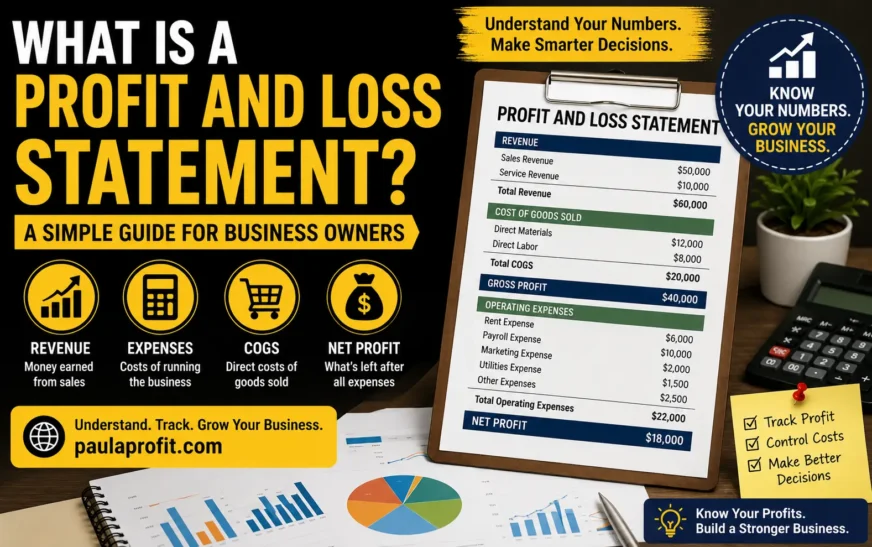
The main parts are simple. Revenue is the money coming in from sales or services. Expenses are the costs you pay to run the business. In some reports you will also see cost of goods sold. That is the direct cost of making or buying the product you sell. The SEC and IRS both describe these as the key building blocks of an income statement.
Revenue
Revenue is your top line. It is the total sales value before expenses are removed. If you sell services. This may be the fees you charge. If you sell products. This may be the amount customers pay for those products.
Expenses
Expenses are the costs that keep the business moving. They can include rent. Payroll. Advertising. Utilities. Insurance. Interest. And taxes. The SEC lists labor costs rent interest expense and tax expense as common examples. business.gov.au also points to items like accountant fees marketing rent utilities and insurance.
Cost of Goods Sold
Cost of goods sold is often called COGS. It is the direct cost tied to the products or services you sell. For a store it may be the wholesale cost of inventory. For a maker it may be raw materials and direct labor. The SEC explains that COGS reflects the direct expenses used to produce the products or services sold.
How to Make a Profit and Loss Statement
The process is easier than many people think. Start by gathering your records. Then list your revenue. Then list your direct costs. After that list your operating expenses. Finally subtract everything from revenue to get your net profit or loss. The SEC shows the same basic formula. Revenue minus expenses equals net income or loss.
Step 1. Gather Your Records
Before you do any math. Pull together your invoices. Bank statements. Receipts. Sales records. Payroll records. And expense records. The IRS says a good recordkeeping system should clearly show income and expenses and should include supporting documents like invoices receipts and account statements.
Step 2. Add Up Your Revenue
Next total all income for the period you want to review. That period can be a month. A quarter. Or a full year. business.gov.au says many businesses complete a profit and loss statement every month quarter or year. That makes it easier to track trends instead of guessing how the business is doing.
Step 3. Subtract Direct Costs
Now remove the direct costs tied to the sales you made. If you sell products. This usually means COGS. If you sell services. Your direct service costs may go here instead. After this step you get gross profit. That number tells you how much is left before overhead costs are removed.
Step 4. Subtract Operating Expenses
Now take away the costs of running the business. This is where rent payroll marketing software subscriptions utilities and similar expenses usually go. When you subtract these from gross profit you get operating profit or operating income. That number gives a clearer view of how the business is performing day to day.
Step 5. Find the Bottom Line
After all costs are removed you reach net profit or net loss. This is the number most people care about first. It tells you whether the business kept money after paying its bills. If revenue is 50000 and total expenses are 38000 the net profit is 12000. That simple math is the heart of the report.
Cash Method vs Accrual Method
One detail many people miss is timing. Under the cash method you record income when payment is received. Under the accrual method you record the sale when it happens. The SBA explains this difference clearly and says the method you use changes how your numbers appear on the books.
That matters because the same business can look different under each method. A strong sales month can still look weak if customers have not paid yet under the cash method. That is why it helps to know which method your books use before you read the report.
Profit and Loss Statement vs Balance Sheet
These reports are not the same thing. A profit and loss statement shows performance over time. A balance sheet shows what the business owns and owes at one point in time. The SEC and SBA both treat them as separate tools that work together to show the full picture.
This is a useful way to think about it. The P and L tells you how the business moved. The balance sheet tells you where the business stands. When you read both together you get a much better view of health and risk.
A Simple Way to Read the Report Faster
Do not read it line by line like a tax form and stop there. Look for change. Compare this month with last month. Compare this quarter with the same quarter last year. That is where the real story lives. Business.gov.au says the statement helps with targets and pricing. The SBA says financial numbers should help you make decisions. Those decisions become sharper when you compare periods instead of staring at one report alone.
This is the fresh insight many guides miss. A profit and loss statement is not only about profit. It is also about pattern. A small drop in gross profit can warn you about rising costs before the problem gets serious. A steady rise in marketing spend can show growth only if revenue rises with it.
Who prepares a profit and loss statement
In real life the report is usually prepared by the business owner. Or the bookkeeper. Or the accountant. The IRS says owners must keep records that clearly show income and expenses. The SBA also says you might want help from a CPA bookkeeper or online service. For sole proprietors the IRS uses Schedule C to report business income or loss.
So the answer is simple. Whoever keeps the books usually prepares it. In a small business that may be you. In a larger business it may be the finance team. Either way the report depends on accurate records and clean categorization.
Common Mistakes to Avoid
The biggest mistake is mixing personal and business money. The IRS warns that business records should clearly separate income and expenses and that personal expenses should not be treated as business costs. Another common mistake is skipping direct costs and only looking at sales. That makes profit look better than it really is.
A second mistake is waiting too long to review the report. A P and L is most useful when you check it regularly. Monthly is a good starting point for many businesses. That habit helps you catch problems early and adjust pricing spending or sales goals before the numbers drift too far.
FAQ’s
What is the Profit and Loss Statement?
A profit and loss statement is a financial report that shows your revenue expenses and net profit or loss over a set period. The SEC says it is one of the primary financial statements and it reflects performance over time.
What is a Profit and Loss Statement in Simple Words?
In simple words it tells you whether your business made money or lost money. It starts with sales and ends with the bottom line after all costs are taken out.
What is the Main Purpose of the Statement of Profit or Loss?
Its main purpose is to show how the business performed during a specific period. ACCA says the statement is meant to present financial performance in a way that is useful and easy to compare.
How Do You Make a Profit and Loss Statement?
You gather your records. Add up revenue. Subtract direct costs. Then subtract operating expenses. The result is net profit or net loss. That is the basic structure used by the SEC and SBA.
Who Prepares a Profit and Loss Statement?
Usually the owner bookkeeper or accountant prepares it. For a sole proprietor the IRS uses Schedule C to report income or loss from the business. The person preparing it needs clean records and clear support for each number.
Conclusion
A profit and loss statement is one of the clearest ways to see how your business is doing. It shows what came in. What went out. And what stayed behind as profit or loss. If you review it often and keep your records clean you can make better pricing spending and growth decisions. Start with your latest month and build from there. For more practical business content visit paulaprofit.com.