








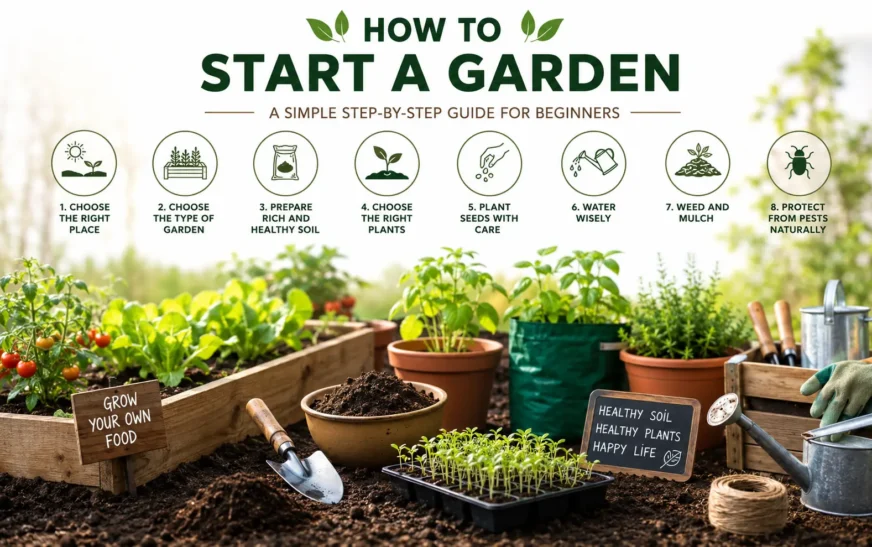
Starting your own garden at home can be one of those life decisions that becomes more valuable with time. It gives you not only fresh and organic food. It also brings peace to your mind and adds a natural beauty to your home environment. But if you are trying gardening for the first time then understanding soil seeds and weather can feel a little confusing.
In this complete guide we will understand in a simple and practical way how you can set up a successful home garden without wasting too much money or time. We will explain every step in a way that it directly reaches your heart and mind and you can truly see real benefit from it.
Step 1: Choosing the Right Place for Your Garden (Location is Everything)
In gardening the first and biggest mistake people make is in choosing the location. One wrong decision can waste your months of hard work. You need to find a place in your home where the following two things are necessarily available.
1. Amount of Sunlight (Sunlight Requirement)
Most vegetables, fruits, and flowering plants need 6 to 8 hours of direct sunlight every day to grow properly. If your garden does not get sunlight then the plants will become tall and weak and they will not produce any fruit.
2. Proximity to Water (Water Access)
The closer your garden is to a water source like a tap or pipeline the easier it will be for you. If you have to stand in the sun every day and carry buckets from far away then you will get tired very quickly and you may stop gardening.
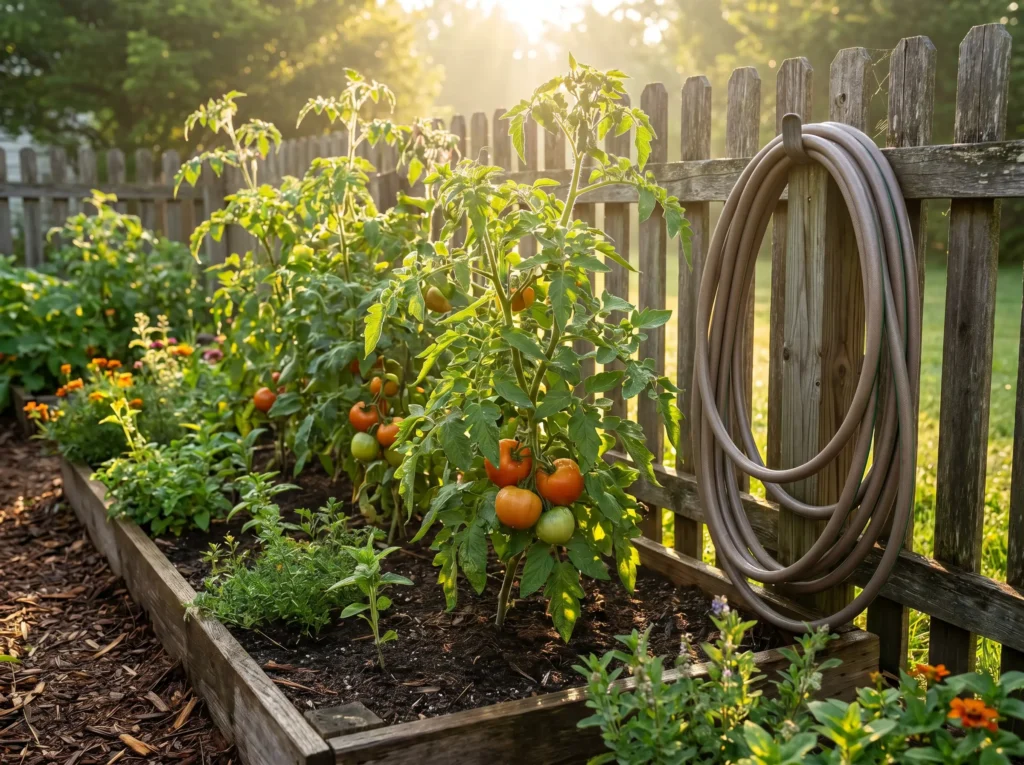
Step 2: Choose the Type of Garden (In Ground, Raised Beds, or Containers)
Every home has a different layout. You need to see whether you have soil ground available or you only get sunlight on your balcony or rooftop.
In Ground Gardening (Garden on Soil): If you have an open yard or lawn where soil is available then this is the cheapest method. You just need to dig the soil and make it soft.
Raised Beds (Elevated Beds): This means building frames above the ground using wood bricks or concrete and filling them with fresh soil. The benefit of this is that fewer weeds grow in it drainage is better and the soil stays loose more easily.
Container Gardening (Gardening in Pots): If you are starting on a rooftop balcony or a concrete floor then pots grow bags and even old buckets are the best option for you. This is perfect for people who have limited space.
Step 3: Soil Preparation (The Secret is in the Soil)
A golden rule of gardening is. Do not grow plants. Make the soil fertile and the soil will grow the plants itself. If your soil is hard or it does not have nutrients then no matter how expensive seeds you plant you will not get any fruit.
Default Condition of the Soil
Your soil should not be too sandy where water does not stay at all and it should also not be too clay heavy which becomes hard like stone when dry and suffocates the roots of plants.
Use of Organic Matter (Compost)
The simplest and most tested way to improve soil is to add organic matter such as compost or old cow dung manure. Compost increases the soil’s ability to absorb water and helps it retain moisture for a longer time. Along with this it also provides essential nutrients to plants which keeps them healthy and helps protect them from diseases.
If you are starting a new garden then the best method is to mix half soil and half compost to make a mixture meaning 50 percent soil and 50 percent compost.
Step 4: Choosing the Right Plants and Seeds (What to Grow?)
When gardening for the first time do not try to grow everything. Start only with things that are easy to grow and that your family enjoys eating.
1. Seeds vs Transplants (Nursery Plants)
- Seeds (Beads): Some things are easy to grow directly from seeds such as radish carrots spinach coriander and okra.
- Transplants (Nursery Plants): Some plants need to be first grown in a small place and then moved into bigger pots. For beginners it is better to take tomato green chili and eggplant plants directly from a nursery and plant them.
2. Seasonal Consideration (Seasonal Gardening)
Understanding the season is very important in gardening. Every vegetable has its own natural season where it grows best. In summer tomatoes, tinda, bitter gourd, and okra grow well while in winter spinach, fenugreek, radish, carrots, and cauliflower are more suitable.
If you plant crops against their season then plants often do not grow properly and can become weak or even die. That is why choosing the right time is the real secret of success in gardening.
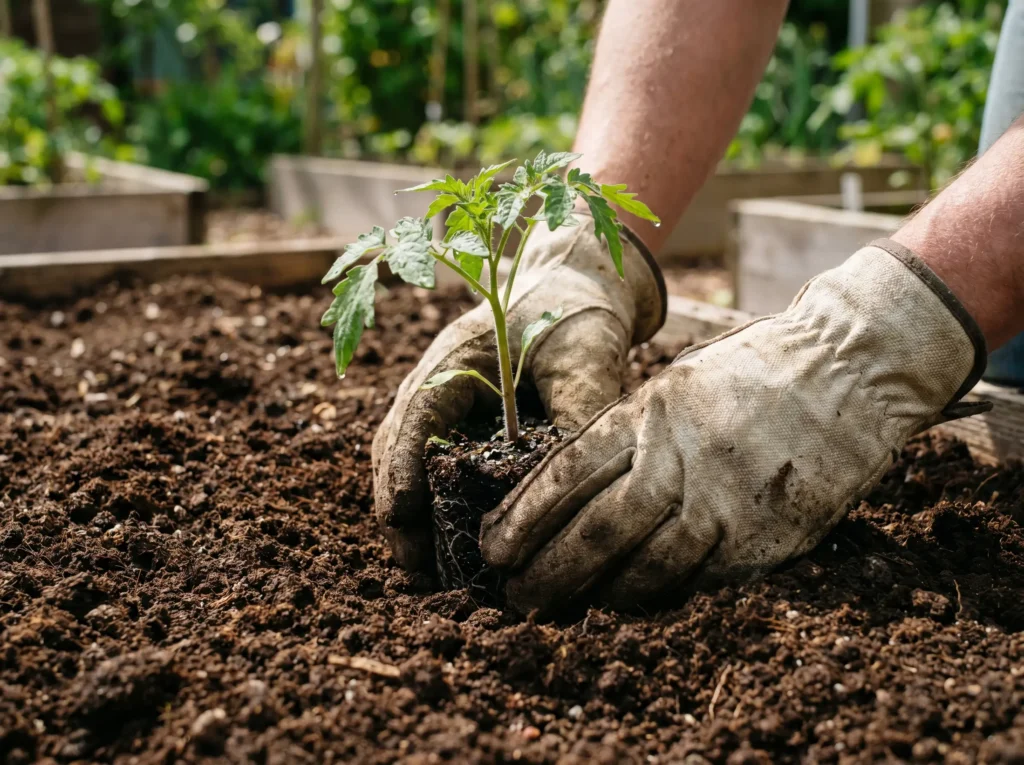
Step 5: Proper Method of Planting Seeds (Planting with Care)
While planting seeds people make two big mistakes. They either plant them too deep or they place them too close together.
Depth: The rule is that the seed should be planted in the soil at a depth about twice its size. Small seeds like coriander or spinach are just scattered on top of the soil and then lightly covered with a thin layer of soil.
Spacing: Every plant needs its own space to grow. If you plant two tomato plants too close together then they will compete for nutrients and both will remain weak. Always follow the spacing instructions written on the seed packet.
Step 6: Proper Watering Method (Smart Watering)
Watering plants is an art. Giving too much water causes plant roots to rot and giving too little water makes the plants dry out.
1. Check the Soil (The Knuckle Test)
Before watering always remember a simple method. Put your finger about one inch into the soil to check it. If the soil feels dry inside then it is okay to water. But if the soil is already moist or wet then avoid giving more water at that time.
2. Water the Roots Not the Leaves
Always give water near the roots of the plants directly into the soil. Avoid pouring water on the leaves because in sunlight it can act like small lenses and burn the leaves. It also increases the risk of fungus due to excess moisture.
The best method is to water in the morning so that extra moisture can naturally dry during the day light and heat keeping the plants healthy.
Step 7: Weeding and Mulching (Protecting the Garden)
Along with your garden growing some unwanted weeds will also start to grow that you did not plant. These weeds absorb all the nutrients and water from the soil and leave your real plants hungry.
Weeding (Removing weeds): Once a week, walk through your garden and remove every unwanted plant along with its roots that you did not grow.
Mulching: Spreading a layer of dry leaves wood chips or dry grass on top of the soil is called mulching. Its benefit is that it helps the soil retain moisture prevents it from drying out in the sun and stops weeds from growing.
Step 8: Protection from Insects and Diseases (Organic Pest Control)
When your garden becomes green and healthy then insects will definitely come. But this does not mean you should immediately start using chemical sprays because these chemicals can end up in your food.
- Neem oil spray is a very good and natural way to protect plants from insects. To make it take one liter of water and mix in one small spoon of neem oil. Add a few drops of dish wash liquid as well so that the mixture blends properly. Then pour this solution into a spray bottle.
Spraying it lightly on plants once a week usually keeps most insects away and helps the plants stay healthier.
- Friendly Insects: Not every insect is an enemy. Ladybugs and bees (honey bees) are friends of your garden. They eat harmful insects and help in pollination.
Frequently Asked Questions (FAQs)
Q1. What are the easiest vegetables to start a garden with?
For beginners, growing spinach, coriander, radish, green chilies, and eggplant is the easiest. These plants grow well even with low maintenance.
Q2. Can I start a garden using leftover seeds from my kitchen?
Yes, you can use seeds from your kitchen like whole coriander seeds, fenugreek seeds, and even seeds taken from inside tomatoes. You can plant them directly in soil without drying them to grow plants.
Q3. How often should I give fertilizer to my plants?
If you have already mixed a good amount of compost while preparing the soil, then you do not need extra fertilizer for the first two months. After that, giving a handful of compost or liquid organic fertilizer every 20 to 30 days is enough.
Q4. Why are the leaves of my plants turning yellow?
The two main reasons leaves turn yellow are either you are overwatering the plants or there is a lack of nitrogen nutrients in the soil.
Q5. What size pot is best for balcony gardening?
For small vegetables and herbs like coriander and mint, an 8 to 10 inch pot is enough. But for tomato, eggplant, and lemon, you need a larger pot or grow bag of at least 12 to 14 inches.
Conclusion
Starting a home garden is not a difficult science. It is actually a beautiful way to build a natural connection with nature. In the beginning, small mistakes are completely normal. Some plants will dry out and some seeds may not sprout, but all of this is part of the learning process.
The most important thing is to start with a small space and fewer plants. Focus on fertile and healthy soil, and give your plants the right amount of water and sunlight according to their needs. With time, your experience will grow and your home will be filled with fresh and organic food grown by your own hands.
You can follow this guide, prepare your first bed or pot, and start your gardening journey today. 🌿